
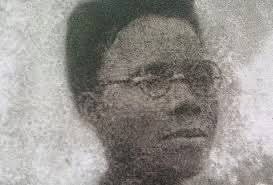
Adunni Oluwole remains one of Nigeria’s most intriguing and controversial figures from the late colonial era. While nationalist leaders rallied the masses for immediate self-rule, Oluwole stood nearly alone as a vocal critic of rapid independence. She argued that Nigeria was not yet prepared for the responsibilities of self-governance, warning that independence could bring grave consequences without adequate preparation
Born in 1905 to a warrior family in Ibadan, Oluwole’s fierce reputation was shaped by both her upbringing and her independent nature. She spent part of her early life under the care of Bishop Howells of St John’s Church, Aroloya, Lagos, before growing up in Mushin.
From a young age, she demonstrated a talent for creativity and leadership. As a teenager, she wrote a successful play for the Girls’ Guild of St John’s Church, Lagos, directed by Nigeria’s nationalist icon, Herbert Macaulay.
Later, she became the first woman in Western Nigeria to establish a professional theatre company, using drama as a medium for social and political commentary.
Oluwole’s political journey reached national prominence during the 1945 General Strike, a pivotal event in Nigeria’s labour and nationalist movements. When the colonial government withheld workers’ salaries, she mobilised women in support of the striking workers, personally donating funds to trade unions. Her grassroots efforts earned her widespread recognition, particularly among women and rural communities.
A staunch unitarist, Oluwole was a fierce critic of Nigeria’s political elite. In 1954, she founded the Nigerian Commoners Party, which opposed the swift transfer of power to indigenous leaders. She believed this would only usher in “internal colonialism” under Nigerian elites, instead of genuine freedom for the masses.
Oluwole defied the odds by winning a seat in the 1954 Western Region House of Representatives election in Ikirun (now part of Osun State). As a woman in a male-dominated political space, she defeated candidates from both the NCNC and the Action Group, led by Nnamdi Azikiwe and Obafemi Awolowo.
Her views, particularly her resistance to independence, earned her mockery among Yoruba communities, with her movement nicknamed “Egbe Koyinbo Máílò” or “The White Man Must Not Go.” Yet, her warnings about dictatorship, corruption, and the oppression of the masses under post-colonial rule resonated with rural populations already burdened by taxes and wary of elite politics. Her confrontational style brought her into direct conflict with influential figures, including a public insult from Adegoke Adelabu in Ibadan in 1955.
After her banishment from Ibadan, she continued her activism in Akure, staging dramatic public protests, including one where she was pulled through the streets by ropes to symbolise the suffering she believed would befall ordinary Nigerians under post-colonial leadership.
Oluwole passed away in 1957, just three years before Nigeria gained independence. Though dismissed and ridiculed during her lifetime, her critiques of post-colonial governance have gained attention in retrospect. Today, she is remembered as a courageous woman who challenged Nigeria’s dominant nationalist narrative and paid a heavy personal price for her convictions.